


From Mother Earth to the world: How the Earth becomes a message of life
In South Kordofan, where the soil embraces the sun, and where the land still speaks of bounty to those who listen, the story of “Tajammul” was born. It wasn’t a company in the narrow commercial sense, but rather a sincere response to the call of the land, a conscious attempt to redefine the relationship between people and what they cultivate, and between the product and the value it holds, which transcends weight and price.
Umm Qid is not merely a geographical location; it is a living agricultural memory, a reservoir of fertility, and an open school of patience and benevolence. From these verdant gardens emerged “Tajammul,” bearing a clear promise: that wheat would be more than just a crop, and that agriculture would become an act of adornment through work, not merely production.
“Tajammul” believes that quality is not manufactured in factories alone, but begins with respecting the cycle of nature, with caring for the seed, and with a genuine partnership with the farmer. Therefore, its raw materials are not commodities to be bought and sold, but rather the essence of a geological and cultural heritage, shaped over centuries of interaction between people and the land.
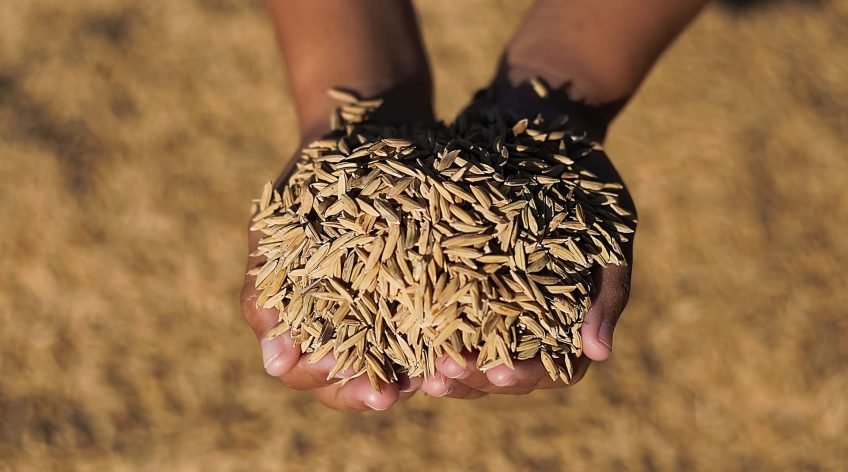
In an age dominated by speed and consumerism, “Tajammul” has chosen a more deliberate approach. It has chosen to be generous in its efforts, making quality a principle, not just a slogan. Every grain of wheat undergoes a long journey of care: from selecting the soil, to implementing sustainable farming methods, to harvesting, and finally, the meticulous selection that ensures the consumer receives a product worthy of their table.
But the message doesn’t end with the product. “Tajammul” sees itself as a bridge: a bridge across which the bounty of South Kordofan can reach global markets, without losing its identity or being emptied of its meaning. It is an economic project, yes, but also a cultural and humanitarian one, believing that true development begins with investment in people, in the land, and in the mutual trust between them.
Thus, the fields become a story, the wheat a message, and the work a genuine embellishment that connects the local with the global, without severing its roots.
Your time is limited, so don’t waste it living someone else’s life. Don’t let yourself be a prisoner of rigid ideas that will only lead you to live with their consequences.